
Active Warrants in Palm Beach County
Warrants in Palm Beach County are issued by judges of the Circuit Court and County Court and served by the Sheriff's Office. There is no confirmed single public website that lists every active Palm Beach County warrant with full detail. That matters, because some private sites claim to offer a warrant lookup that is not official. The safe path is to use the court docket, the Sheriff's booking tool, and direct contact with the Clerk, the court, or counsel.
A warrant usually attaches to a case. When a judge issues a bench warrant or capias, the order can show as a docket entry in the criminal or traffic case. When the warrant leads to an arrest, the booking shows in the Sheriff's blotter. The Sheriff's Arrest & Jail menu is the official jump page for booking search, inmate search, and a Fugitive Most Wanted list.
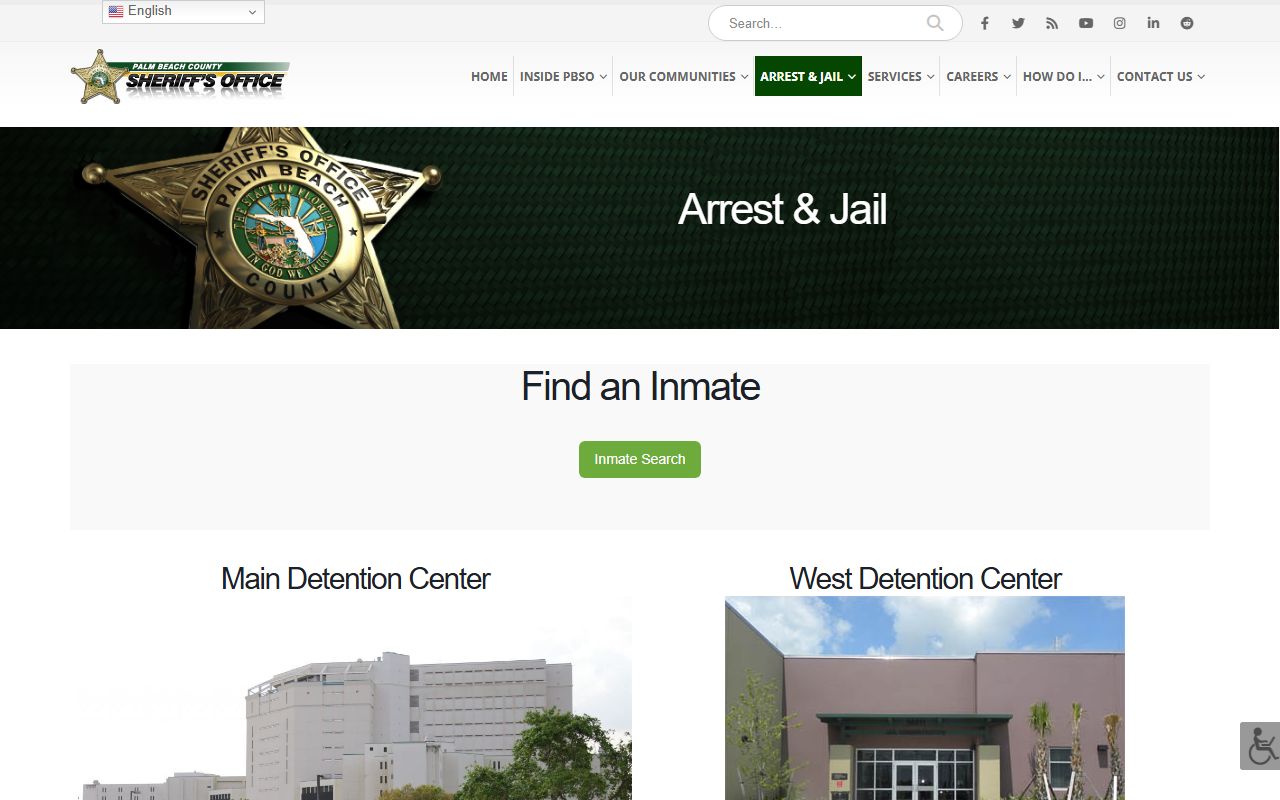
The PBSO Arrest & Jail menu, shown above, gathers the official booking search, inmate search, and most-wanted links a person can use when checking warrant-related activity.
Types of Warrants in Palm Beach County
Florida courts issue several kinds of warrants and custody orders. Each one comes from a different trigger, and the name on the docket tells a reader what happened. Knowing the type helps a person take the right next step.
- Arrest warrant - a judge authorizes an arrest based on probable cause that a crime was committed.
- Bench warrant - issued from the bench, often after a missed court date or a violation of a court order.
- Capias - a Florida custody order commonly used after a failure to appear or similar event.
- Search warrant - authorizes a search of property and is generally not searchable while active.
- Violation of probation warrant - issued after an alleged probation violation.
How to Check for Palm Beach County Warrants
Because there is no dedicated warrant portal, a warrant check uses two official tools. First, search the court case in eCaseView, where bench warrants, capiases, failures to appear, and bond forfeitures may show as docket entries in public criminal or traffic cases. Second, search the PBSO Booking Blotter to see if a person has already been booked.
- Search eCaseView by name or case number and read the docket for warrant-related entries.
- Search the PBSO Booking Blotter by name and date range to check for a recent booking.
- Contact the Clerk, the court division, or a defense attorney about a missed date or a warrant-risk question.
PBSO Booking Blotter Search Fields
The PBSO Booking Blotter is the closest official tool for warrant-related checks, since it shows recent bookings. It is not a warrant database, but a booking can confirm that a warrant led to an arrest. The fields below come from the live blotter. A submission requires a captcha.
| Field Label | Type | Required | Notes |
|---|---|---|---|
| Start Date | Date | For date searches | MM/DD/YYYY; within the past year |
| End Date | Date | For date searches | MM/DD/YYYY; 31-day cap if no other filter |
| Last Name | Text | No | Full or partial allowed |
| First Name | Text | No | Full or partial allowed |
| Statute | Text | No | Max 15 characters |
| Arresting Agency | Dropdown | No | All agencies, PBSO, FHP, and county police departments |
The Booking Blotter search form, shown above, is where a name and date range reveal whether a warrant has already resulted in a booking.
What a Palm Beach County Warrant Entry Shows
When a warrant or capias appears as a docket entry in a court case, it carries a few key details. The exact fields depend on the case, but a warrant-related entry generally includes the items below.
| Field | What It Shows |
|---|---|
| Entry Type | Bench warrant, capias, or failure to appear in the docket text. |
| Issue Date | The date the judge ordered the warrant or capias. |
| Charge / Case | The underlying charge or case the warrant ties to. |
| Bond Amount | The bond set on the warrant or a no-bond status. |
| Issuing Court | Circuit Court or County Court division that issued the order. |
What to Do If You Have an Outstanding Warrant
If a warrant may exist, do not rely on a private aggregator. Verify through official records, the Clerk, the court, or an attorney. Review the underlying case in eCaseView for court dates, case status, and docket entries. If the warrant relates to a missed court date, ask the Clerk or court about motion and calendar options. If bond is set after arrest, PBSO accepts a cash bond by cash, money order, or certified check only, payable to Palm Beach County Sheriff. After resolution, re-check eCaseView and the booking blotter, since online updates can lag.
After an arrest on a warrant, custody and visitation rules apply. The Sheriff's visitation page explains how families register and where video visits take place.
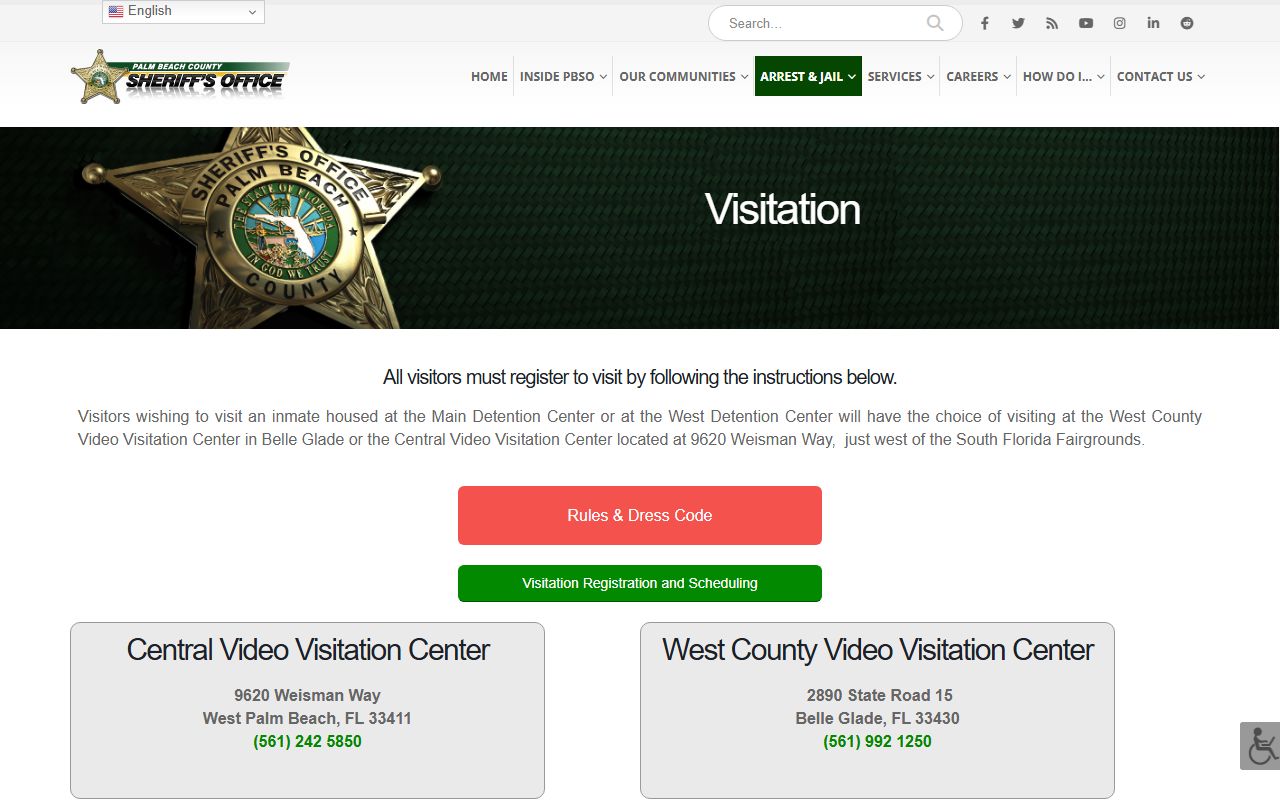
The visitation page pictured here matters once a warrant leads to a booking, since visits run through registered video centers, not the housing facility.
Important: Talk to a defense attorney before turning yourself in on a warrant, since counsel can arrange surrender, bond, and a court appearance in an orderly way.
Warrant and Ticket Scams
Scammers use warrant fear to steal money. In March 2026 the Clerk warned about callers impersonating law enforcement who tell people with real traffic tickets to pay through Zelle to a Gmail account. The Clerk does not accept Zelle and does not use Gmail accounts for public communication. A real warrant or ticket is resolved through official Clerk and court channels, never by a phone payment to an individual. The Clerk's corrections information and official sites are the right starting points.
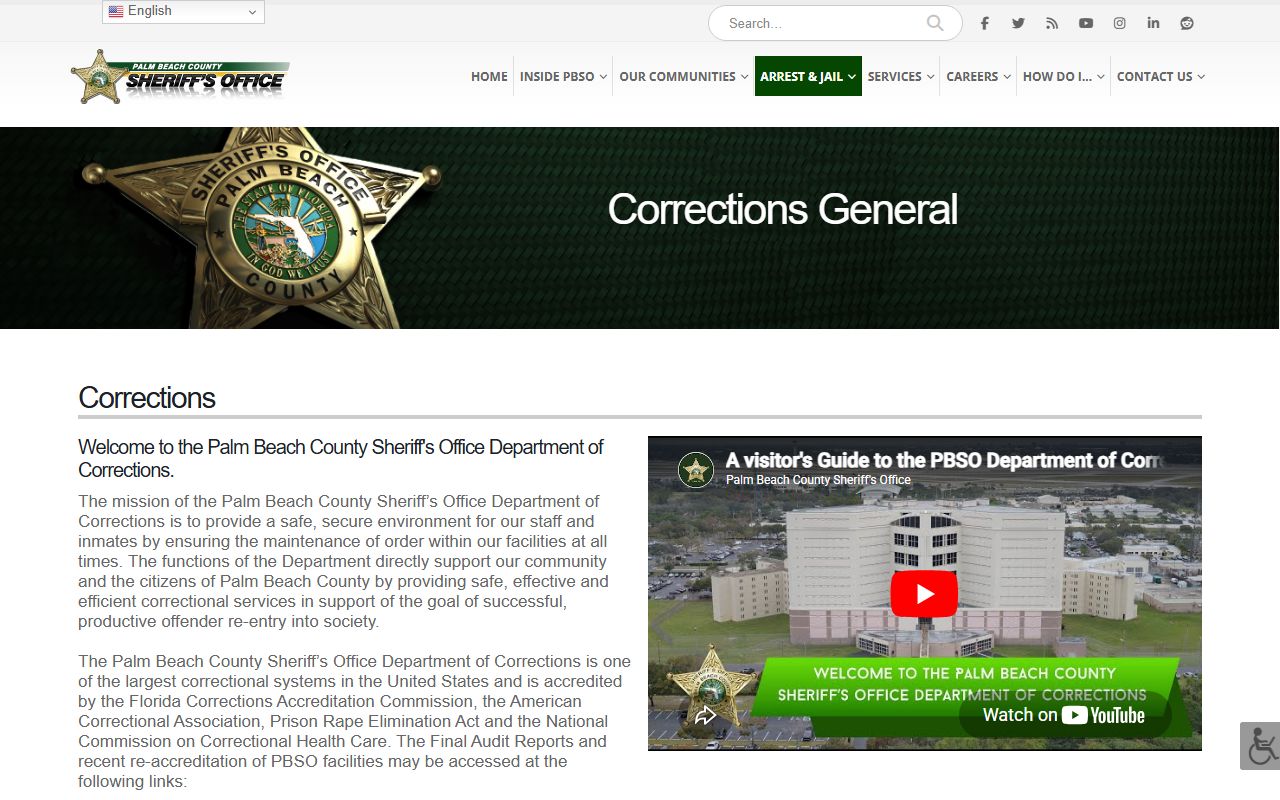
The PBSO corrections page shown above is an official source for jail and custody information that scammers cannot fake.
Failure to Appear and Bond on Warrants
Most bench warrants in Palm Beach County trace back to a missed court date. When a defendant skips a scheduled hearing, the judge can issue a capias or bench warrant and may forfeit any posted bond. The docket entry will often read failure to appear. Acting fast matters. A person who realizes they missed a date should contact the Clerk or the court division right away, since some matters can be addressed through a motion or a new calendar setting before an arrest.
Bond rules are strict. PBSO accepts a cash bond only by cash, money order, or certified check, made payable to Palm Beach County Sheriff, with no personal checks. A bond can be set on the warrant itself, or the warrant can carry a no-bond status that requires a court appearance. Because consequences range from added fees to a license hold to custody, a defense attorney is the best guide before any surrender.
Restricted Palm Beach County Warrant Records
Some warrant information is not public. Search warrants are generally not searchable while active, to protect an investigation. Juvenile matters are confidential under Florida Statutes § 985.04. Sealed cases hide the related docket entries for the duration the court orders. Federal warrants are handled by federal agencies and courts, not PBSO or the Clerk. When a warrant cannot be confirmed online, contact the Clerk, the court, or counsel rather than guessing.