
Florida's Public Records Law
Public access in Florida starts in the state constitution. Article I, section 24 sets a constitutional right of access to public records and meetings, subject to exemptions the Legislature creates. Chapter 119 of the Florida Statutes carries the general process for agency records. The key duty sits in Florida Statutes § 119.07, which tells a records custodian to allow inspection and copying at reasonable times and under reasonable conditions, unless an exemption applies.
A requester generally does not have to explain why they want a public record. The custodian can still redact or withhold information that a statute or court rule makes confidential. Court records carry an extra layer under Florida Rule of General Practice and Judicial Administration 2.420, which treats public access as the default for judicial branch records.
Chapter 119 applies to public agencies such as county departments and law enforcement. That makes it highly relevant to PBSO records, county administrative files, and other non-judicial records. A Chapter 119 request to PBSO is different from a court case search in eCaseView, because the Sheriff and the Clerk hold different kinds of records about the same event.
What Records the Clerk Maintains
The Palm Beach County Clerk wears two hats. As court clerk, the office keeps the case files in eCaseView. As county recorder, the same office keeps Official Records, the recorded instruments filed in the county. The two are separate databases even though one office holds both. A person searching for a lawsuit uses eCaseView, while a person searching for a deed uses Official Records.
- Court case files for civil, criminal, family, probate, traffic, and small claims matters.
- Deeds, mortgages, and liens recorded in Official Records.
- Recorded marriage licenses and tax deeds.
- Notices of commencement, declarations of domicile, and domestic partnership registrations.
- Board of County Commissioners records and county financial reports.
Q: What is the difference between a court record and an agency record?
A court record is a case file held by the Clerk, such as a lawsuit or a criminal case. An agency record is held by a department like PBSO, such as an arrest report or a jail administrative record. A request for everything about an arrest may need both the PBSO record and the Clerk's court file, since they live in different systems.
How to File a Public Records Request in Palm Beach County
Many records can be viewed online for free before any request is needed. When a record is not posted, or a certified copy is required, a written request goes to the right custodian. For court and official records, that is the Clerk's Records Service Center. For sheriff and jail records, that is PBSO.
- Identify the right custodian: the Clerk for court and official records, PBSO for arrest and jail records.
- Describe the records clearly, with names, dates, case or instrument numbers if you have them.
- Submit the request by email, mail, or in person at Room 4.2500 of the Main Courthouse.
- Wait for the custodian to gather the records and quote any fee.
- Pay the fee, then receive the copies by email, mail, or pickup.
The Clerk's Records Service Center email is ORWEB@mypalmbeachclerk.com, and the phone is (561) 355-2932. Do not mail cash, and make checks payable to Clerk of the Circuit Court & Comptroller, Palm Beach County.
Public Records Request Fields
A clear request moves faster. The Clerk's records service transmittal gathers the items below so staff can find the record and quote the fee.
| Field | Required | Notes |
|---|---|---|
| Requester name and contact | Yes | Name, mailing address, email or phone |
| Record type | Yes | Court record, official record, or specific document |
| Case or instrument number | If known | Speeds the search |
| Party name | Yes if no number | Full legal name |
| Year or date range | Recommended | Narrows the search and the fee |
| Copy or certification choice | Yes | Plain copy, certified, or exemplified |
Response Timelines
Florida law does not set a fixed day count for a response. Instead, the custodian must respond in good faith and produce records within a reasonable time, with only the delay needed to retrieve and review them for exemptions. A request for a single recent document moves fast. A broad request that spans many years and needs redaction takes longer. For online certified copies, the Clerk delivers them by email soon after purchase, while mailed or in-office requests run longer, so the Clerk tells requesters to allow adequate time.
Public Records Fees in Palm Beach County
Copy and certification fees are set by the Florida Legislature, and a special service charge can apply when a request needs extensive staff time. Card payments through the Clerk's processor add a 3.5 percent charge. The published fees below apply to most court and official record copies.
| Item | Amount |
|---|---|
| Copies up to 8.5 x 14, per page | $1.00 |
| Certifying copies, per instrument | $2.00 |
| Records search, per year per name | $2.00 |
| Electronic certified document | $8.00 plus 3.5% processing |
Records That Are Exempt
Florida law makes several categories confidential. Juvenile justice information is exempt under Florida Statutes § 985.04. Adoption records are confidential under Florida Statutes § 63.162. Sealed criminal histories under Florida Statutes § 943.059 are shielded from ordinary public view. Personal identifiers such as Social Security numbers and protected addresses are redacted from public files.
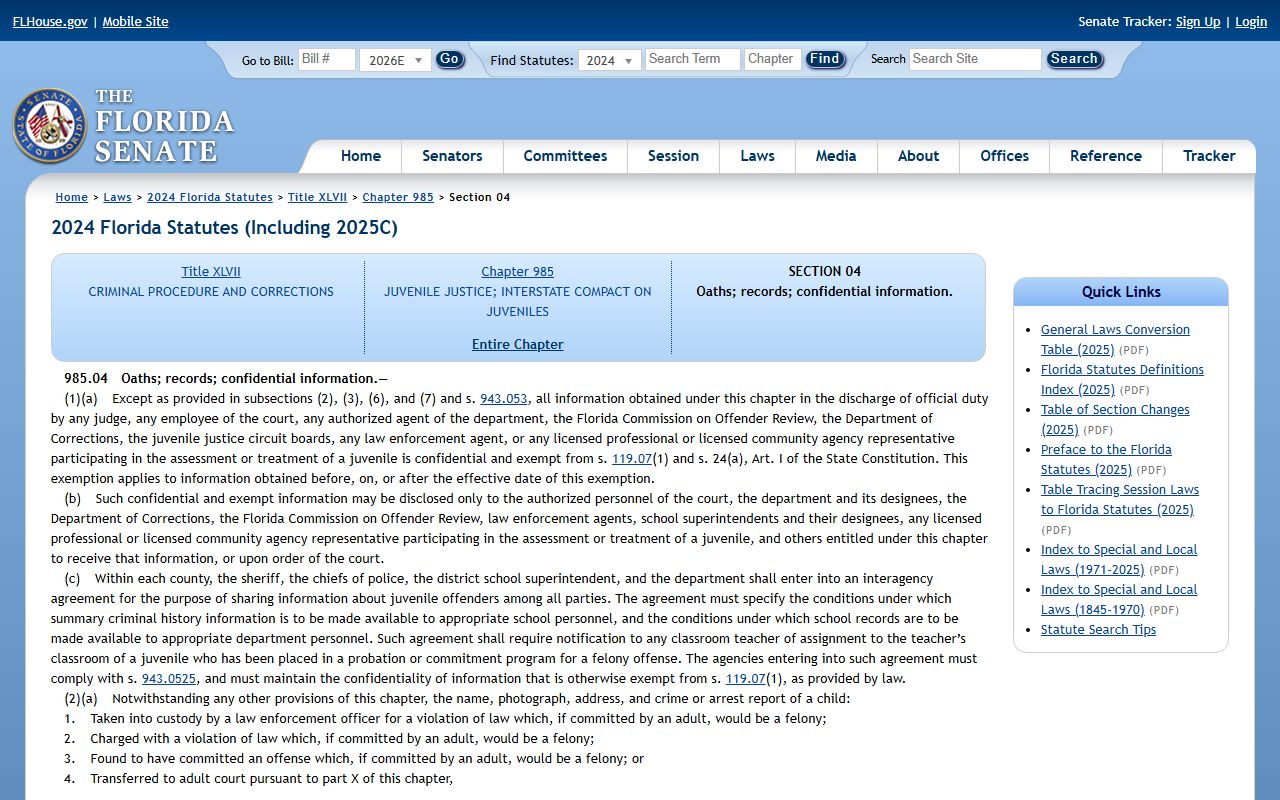
The juvenile confidentiality statute shown above is one reason a public records search will not return certain youth case files.
Adoption records sit behind a closed-hearing rule, which the adoption confidentiality statute spells out.
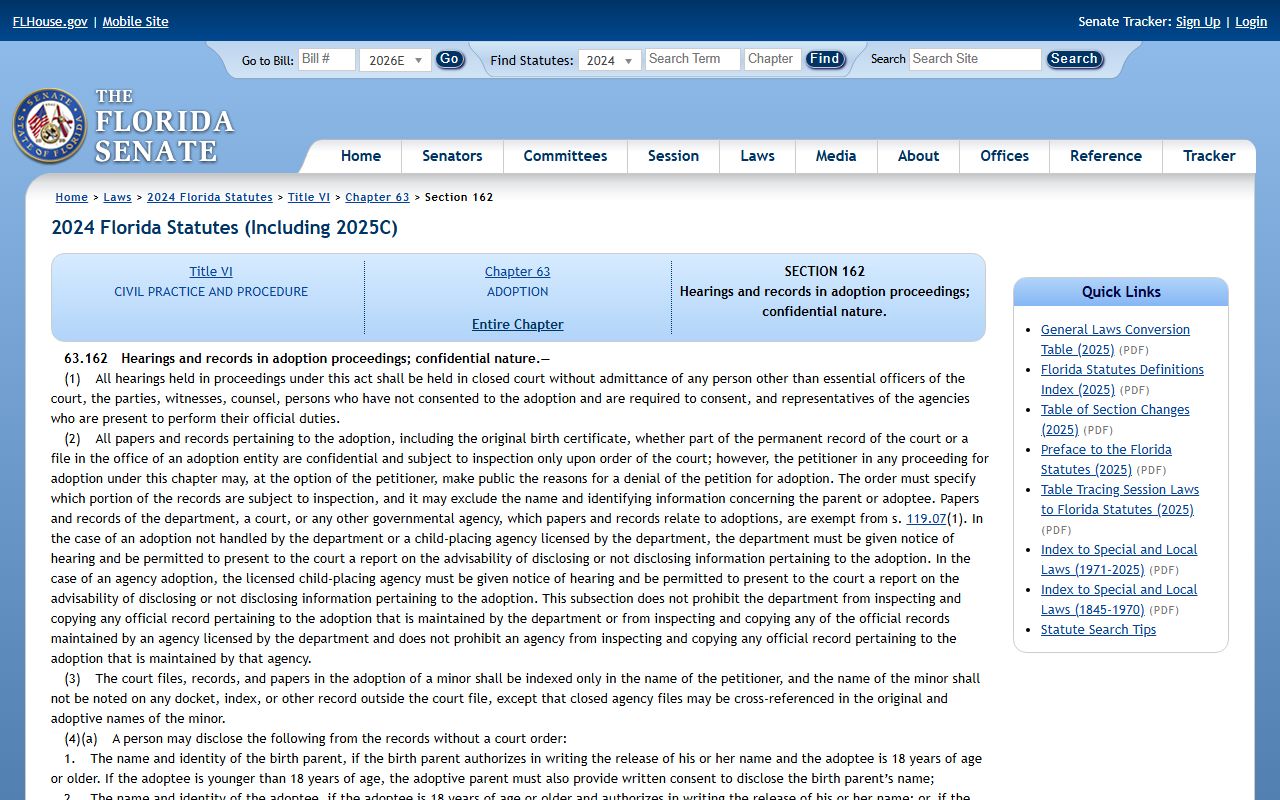
The adoption statute pictured here closes those hearings and keeps adoption files out of the general public record.
Sealed and Expunged Criminal Records
Criminal histories can be sealed or expunged by court order, which removes them from a public records search. Sealing under Florida Statutes § 943.059 hides a record from ordinary public view while letting some agencies still access it. Before a court will act, the person must apply to the Florida Department of Law Enforcement for a Certificate of Eligibility. The FDLE explains the steps and the eligibility limits on its sealing and expunction page.
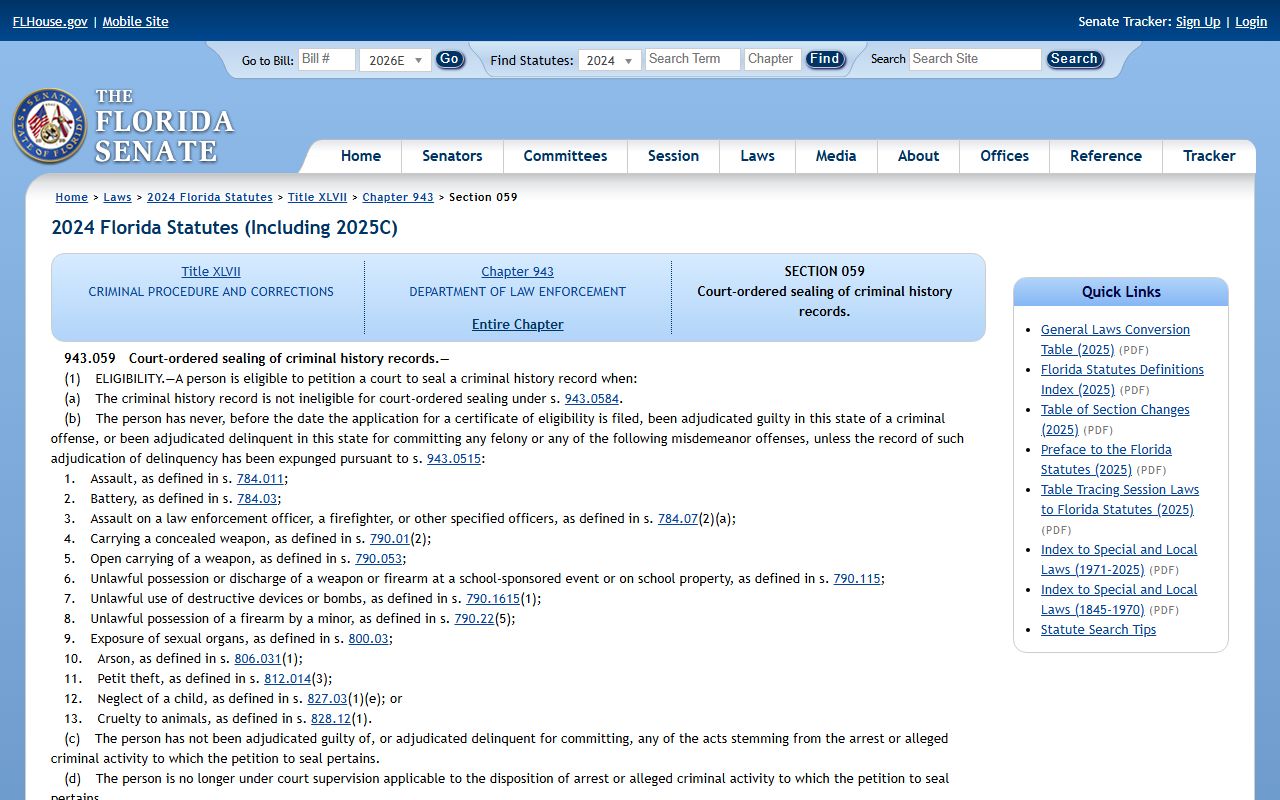
The sealing statute shown above is how a qualifying criminal record disappears from ordinary public access.
The FDLE process page walks through the Certificate of Eligibility that must come before any court petition.
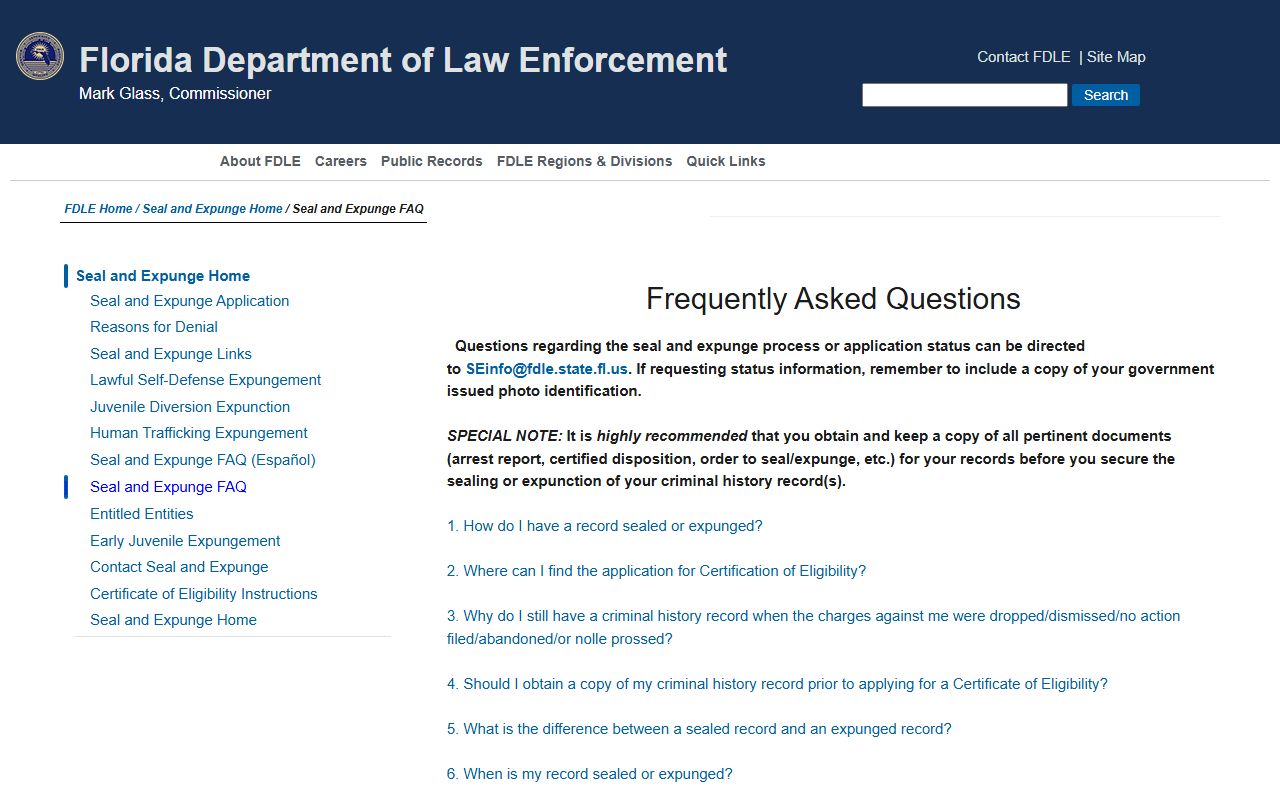
The FDLE FAQ pictured here is the official starting point for anyone seeking to seal or expunge a Palm Beach County record.
If Your Request Is Denied
A custodian who withholds a record must give a written basis for the denial under Florida Rule 2.420 for court records. For agency records under Chapter 119, a requester can challenge a denial through statutory remedies, including a court action that the law allows to move on an expedited basis in some situations. Before any legal step, ask the custodian to point to the specific exemption, since a narrowed request sometimes resolves the issue without a fight.