
Palm Beach County Circuit Court Overview
Florida runs a unified court system with two trial-court levels: circuit courts and county courts. The Circuit Court is the higher trial court. In Palm Beach County, it hears felony criminal cases, family law and dissolution, probate, guardianship, mental health, juvenile dependency and delinquency, and civil claims above $50,000. It also hears appeals from County Court rulings. Palm Beach County is the entire Fifteenth Judicial Circuit, one of 20 judicial circuits in Florida.
The Court Administration office for the circuit supports 54 judges and 9 magistrates, with nearly 200 state and county employees. The Chief Judge and Court Administrator oversee judicial and non-judicial matters across the circuit. Most circuit court business runs through the Main Courthouse in downtown West Palm Beach, with branch courthouses serving the north, south, and west parts of the county.
Palm Beach County Circuit Court Locations
The circuit court is organized by division rather than by numbered courts. Civil, family, probate, criminal, and other divisions sit at the Main Courthouse and at branch service locations. The table lists the main court and service locations with their addresses and the main public phone line.
| Location | Role | Address | Phone |
|---|---|---|---|
| Main Courthouse | Civil, family, probate, criminal, records | 205 N. Dixie Highway, West Palm Beach | (561) 355-2996 |
| Governmental Center | Clerk administration and finance | 301 N. Olive Avenue, West Palm Beach | (561) 355-2996 |
| Criminal Justice Complex | Sheriff and detention complex | 3228 Gun Club Road, West Palm Beach | (561) 688-3000 |
| West County Courthouse | West county branch services | 2950 State Road 15, Belle Glade | (561) 355-2996 |
Courtroom numbers in the Main Courthouse follow the floor, so courtroom 11D sits on the eleventh floor. Civil, family, probate, and guardianship services cluster on the third floor.
Circuit Court vs. County Court
Florida's two trial courts split the work by case size and seriousness. The Circuit Court takes the larger civil cases, felonies, and family matters. The County Court takes misdemeanors, traffic, small claims, and smaller civil cases. There is no separate justice or JP court in Florida, so the comparison is between these two levels.
| Circuit Court | County Court | |
|---|---|---|
| Civil Limit | Over $50,000 | $50,000 or less |
| Criminal Jurisdiction | Felonies | Misdemeanors, criminal traffic |
| Family Cases | Yes | No |
| Probate | Yes | No |
Both courts share the Clerk and the eCaseView search system, so a single search can return cases from either level. The Palm Beach County Court page covers the lower court in detail.
How a Case Moves Through the Palm Beach County System
A criminal case and a civil case follow different paths, but both can end at a District Court of Appeal. The flow diagrams below show the typical order.
Criminal flow: Arrest › First Appearance › Information or Indictment › Arraignment › Pretrial › Trial › Sentencing › District Court of Appeal
Civil flow: Petition Filed › Answer › Discovery › Mediation › Trial › Judgment › District Court of Appeal
Appeals from the Circuit Court go to a Florida District Court of Appeal, with limited further review by the Florida Supreme Court. County Court appeals also move into the appellate system under Florida rules.
Civil, Family, and Criminal Divisions
The Circuit Court is split into divisions by subject. The Criminal Division handles felony prosecutions. The Family or Unified Family Court handles divorce, custody, child support, paternity, and domestic violence injunctions. The Probate Division handles wills, estates, and guardianships. Circuit Civil handles the larger money disputes. Each division has assigned judges and its own service window at the Main Courthouse.
At the Main Courthouse, criminal services sit on the second floor, while civil, family, probate, guardianship, mental health, and tax deed services cluster on the third floor. This vertical layout lets a litigant find the right division by floor. To search a case in any division, use the Clerk's eCaseView portal and pick the matching court type.
The Fifteenth Judicial Circuit
Palm Beach County makes up the entire Fifteenth Judicial Circuit. The circuit's Court Administration office, profiled on the court administration page, supports the judges, magistrates, and staff who run the trial courts. The Chief Judge has administrative oversight of the circuit. The State Attorney for the circuit prosecutes criminal cases, and the Public Defender represents eligible defendants. The county was created in 1909 and now sits as one of Florida's largest circuits by population.
Why "District Court" Means Something Different Here
People searching for a Palm Beach County district court often expect a local trial court by that name. In Florida there is no local district trial court. The local trial courts are the Circuit Court and the County Court. The term District Court of Appeal refers to the state appellate court. A separate federal system, the U.S. District Court for the Southern District of Florida, covers federal cases for the area, and it is not part of the county court system.
Federal trial matters are searched through PACER, not eCaseView. The federal trial court for the area is the U.S. District Court for the Southern District of Florida.
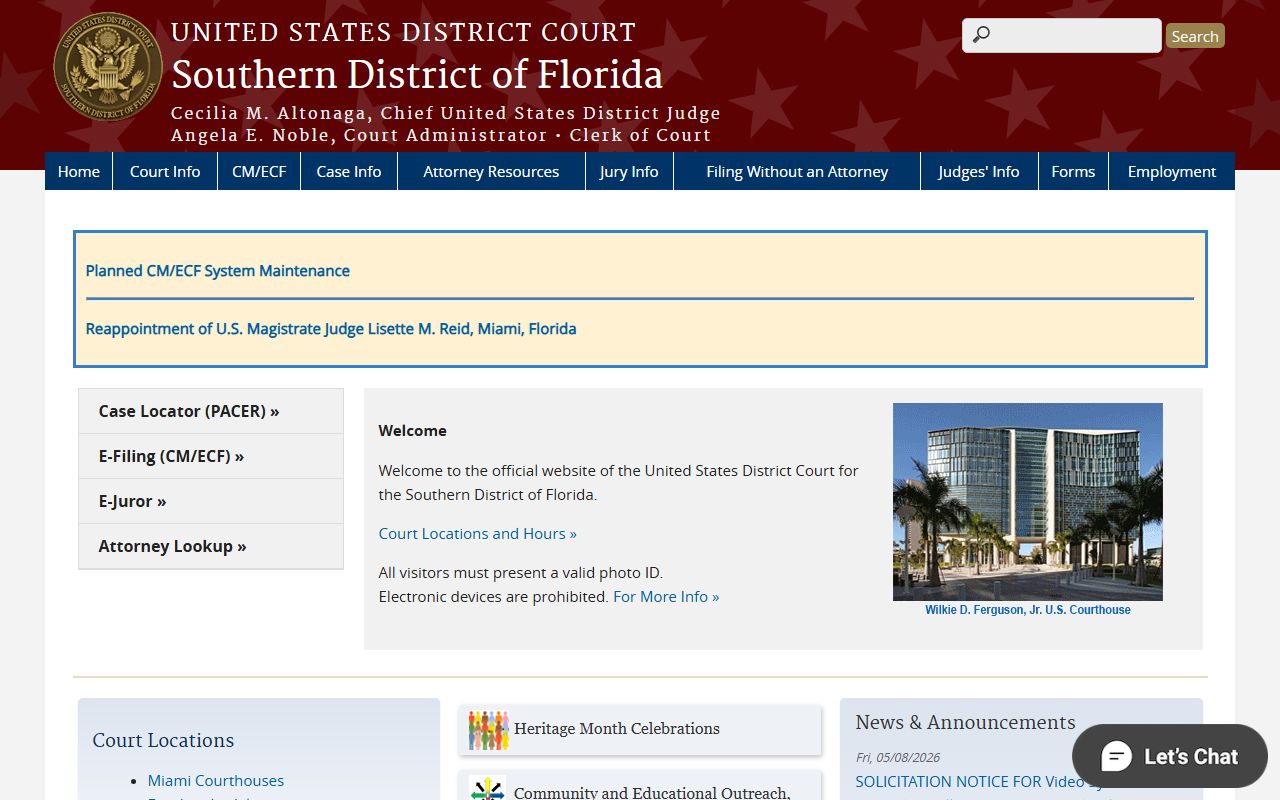
The federal district court shown above handles federal cases for the area and is separate from the county Circuit Court.
Bankruptcy cases go to the U.S. Bankruptcy Court for the Southern District of Florida, another federal court outside the county system.
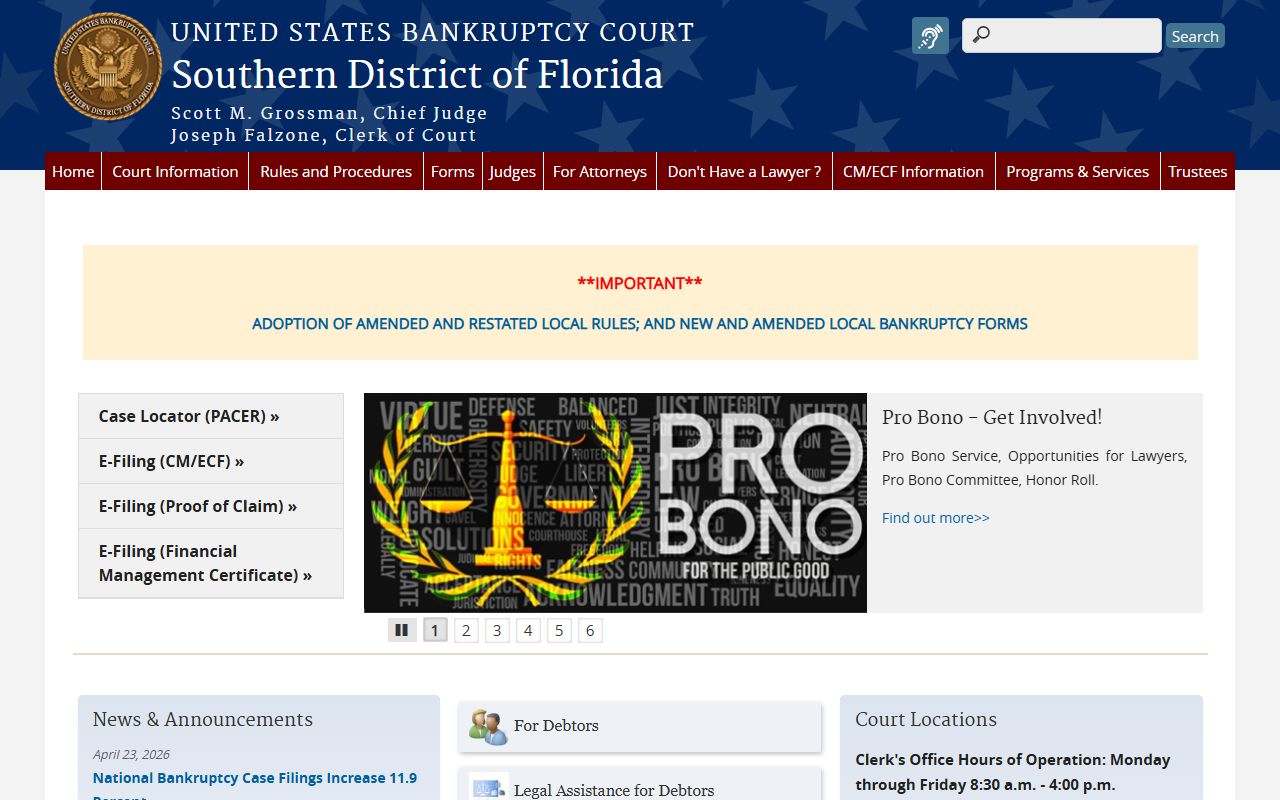
The bankruptcy court pictured here handles federal bankruptcy filings, which never appear in the county eCaseView system.
Public access to federal dockets runs through PACER, the federal court records system.
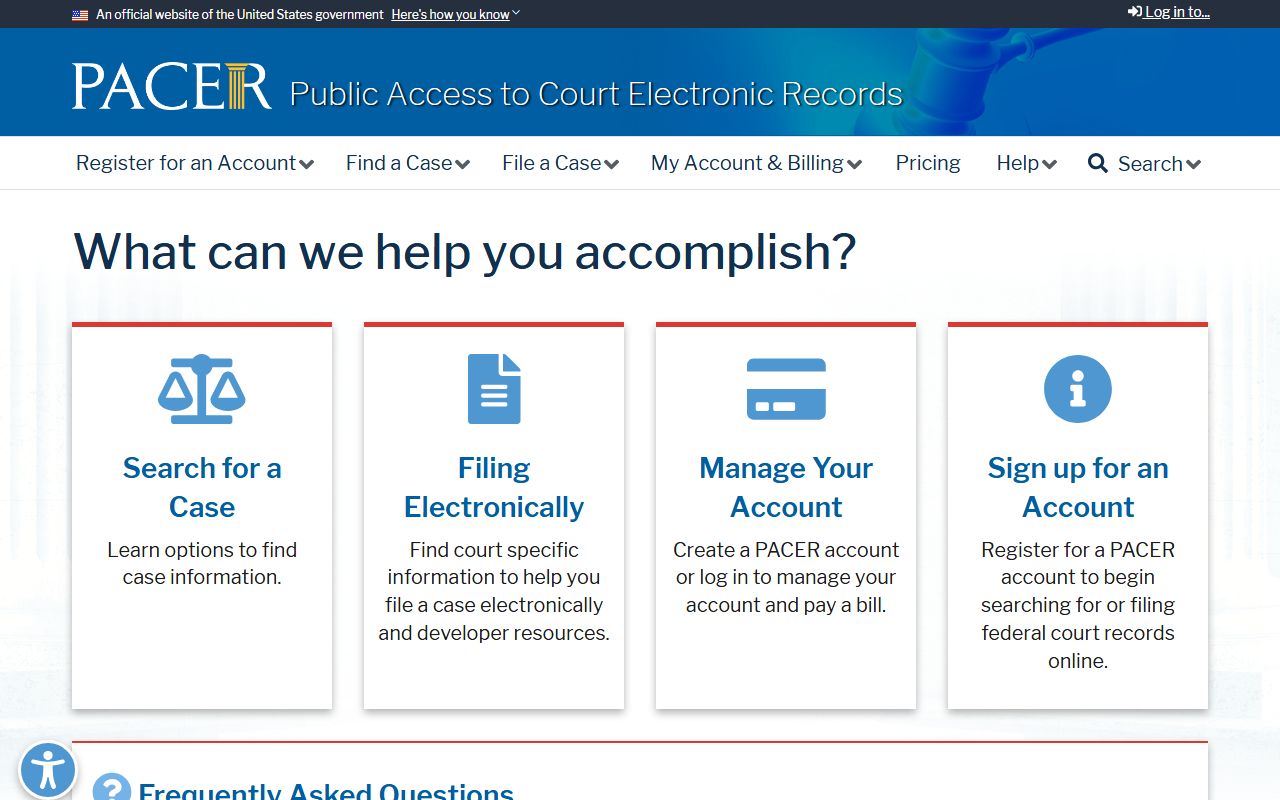
PACER, shown above, is the federal records system used for federal cases, separate from the county Clerk's portal.
Federal appeals from the area go to the U.S. Court of Appeals for the Eleventh Circuit.
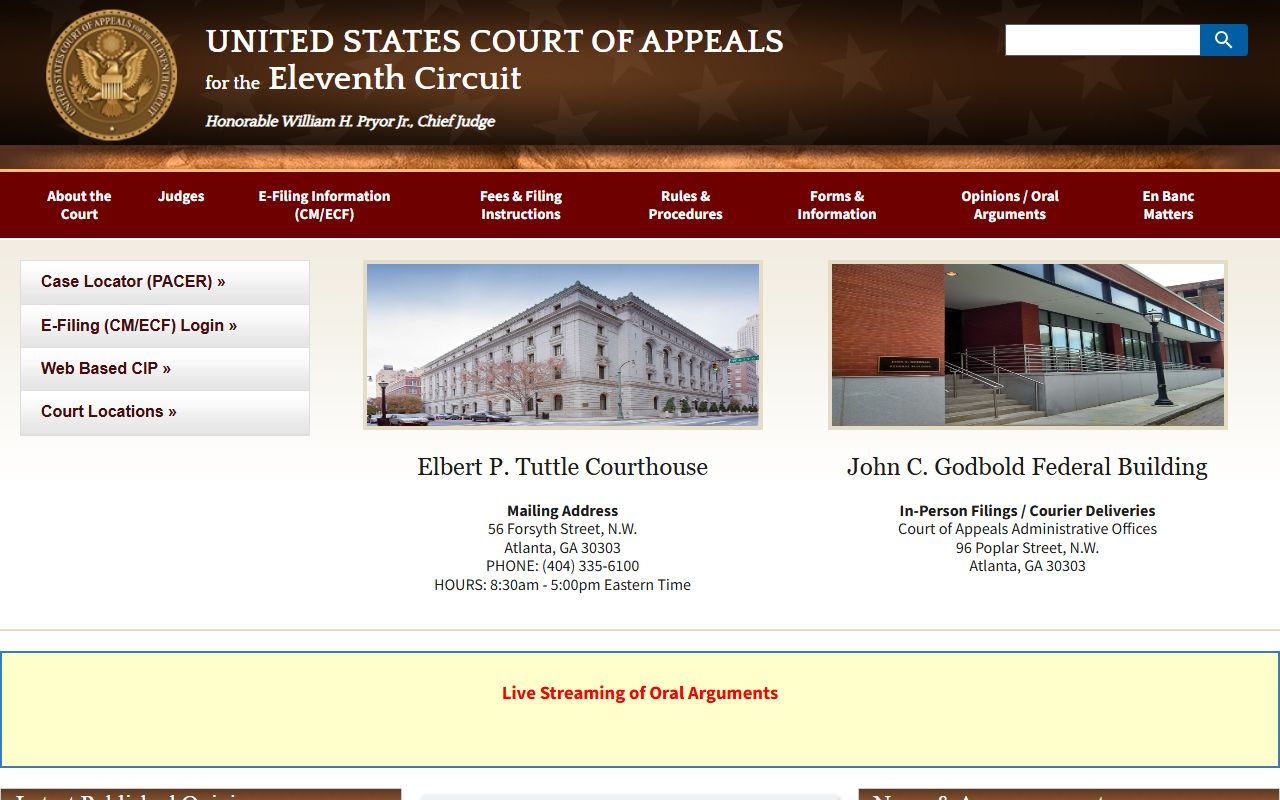
The Eleventh Circuit pictured here hears federal appeals, while state appeals from the Circuit Court go to a Florida District Court of Appeal.
Magistrates and Specialty Courts
The Fifteenth Judicial Circuit uses 9 magistrates who handle assigned matters such as family and support hearings under a judge's authority. The circuit also runs problem-solving courts that show in the case data as special case types. Drug Court appears under felony, misdemeanor, and criminal traffic categories. Veterans Court appears across criminal, ordinance, and traffic categories. A Mental Health Specialty Division handles risk protection orders, firearms petitions, and incapacity matters.
These specialty dockets combine judicial supervision with treatment and regular status hearings. Drug Court pairs testing and treatment with incentives and sanctions. Veterans Court draws on Veterans Affairs benefits and peer mentors for eligible veterans. Family Drug Court intersects dependency cases with parental treatment. Each program routes eligible defendants out of the standard docket and into a supervised track.
Finding Circuit Court Records
Circuit Court case records are public and free to search. The Clerk's eCaseView portal returns felony, family, probate, guardianship, mental health, and circuit civil cases. Search by case number for an exact match, or by party name with a court type and date range. Document images for family, probate, guardianship, and mental health cases are limited to registered users or the attorney of record. For the docket view and more search detail, see the court dockets and court records pages.